When Should I Hire a Professional Dog Trainer?
What to Do When Nothing Seems to Be Working
One of the most common questions I hear from dog owners is some version of this: "Is my dog's behavior bad enough to need a trainer?" The fact that you're asking that question is already telling you something. But let me give you a real answer — one grounded in years of working with dogs and the people who love them.
The Biggest Mistake Dog Owners Make
The number one thing I see holding people back is waiting to see if their dog will outgrow the problem.
I understand the impulse. Puppies and young dogs are works in progress. It's tempting to give it a few more weeks, a few more months, and hope things settle down on their own. But here's what actually happens: while you're waiting, your dog is practicing. Every single time your dog rehearses an unwanted behavior — jumping, barking, pulling, snapping — they get better at it. Dogs learn by repetition, and they don't know which behaviors we want them to repeat.
By the time most people call me, the behavior they were hoping would fade has become deeply ingrained. And the frustration that built up during all those months of waiting? That's taken a toll too — on the dog owner, on their patience, and often on the relationships within the family. I've seen dog behavior become a genuine source of conflict between spouses, between parents and kids, between roommates. A dog that was manageable at six months becomes a much harder problem at eighteen months.
And sometimes, the stakes get much higher. Unchecked behavior can escalate to something unsafe or damaging — and when it does, dogs pay the ultimate price. They get surrendered or euthanized for behaviors that, caught earlier, were very trainable. That's the real cost of waiting.
Red Flags That Mean You Should Call a Trainer Now
Not next month. Not after you've watched a few more YouTube videos. Now.
Here are the situations I consider non-negotiable:
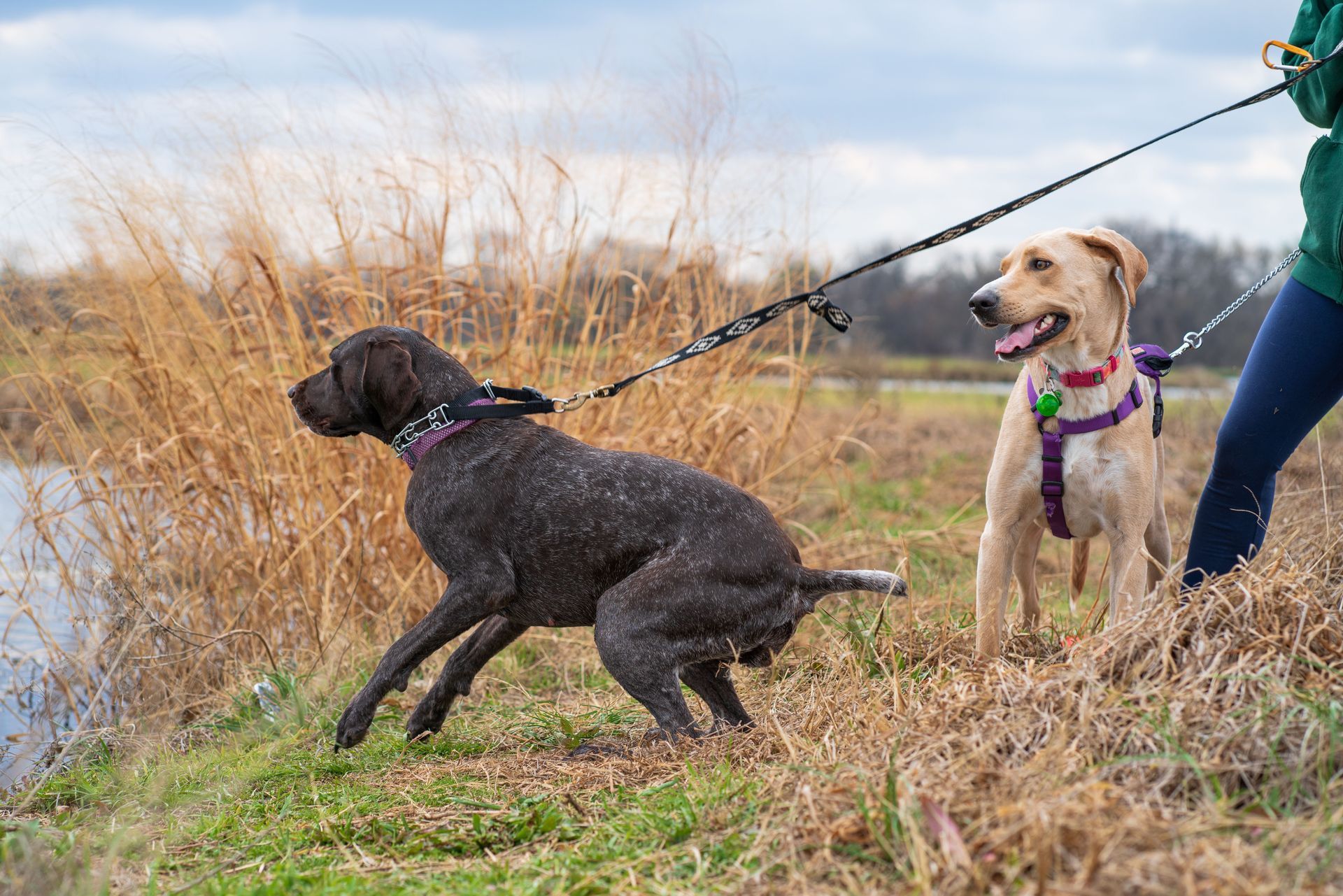
- Your dog is physically hurting people. This doesn't have to mean biting. A large, exuberant dog who knocks over children, chases cyclists and runners, or drags people down on the leash is a liability — and a safety risk. Enthusiasm is not an excuse for injury.
- Your gut is telling you something is wrong. You've started to feel unsafe around your own dog. You've lost trust in them. You find yourself anxious about what they might do next. That instinct matters, and it deserves to be taken seriously.
- The family is arguing about the dog. When a dog's behavior becomes a recurring source of conflict in your household, that's a sign the situation has moved beyond normal dog training bumps.
- Animal control has been involved. I had a client whose dog got out of the yard and chased a person down the street. The person fell trying to get away and called animal control. What started as "my dog doesn't listen" became a legal situation almost overnight. If you've had any contact with animal control, don't wait another day.
What Actually Predicts Dog Training Success
Here's something that might surprise you: the dog's age, breed, and the severity of the behavior problem matter far less than most people think. What I've found, after working with hundreds of dogs and their owners, is that the biggest predictor of success is the owner.
The clients who get the best results share a few things in common. They don't want chaos and uncertainty in their lives. They've made a real commitment to their dog, and they're determined to keep that dog in their home. And most importantly, they're open-minded. They're willing to learn new approaches even when those approaches challenge what they thought they knew.
Dog training always involves a certain amount of personal growth for the humans. That's not a knock on anyone — it's just the reality of what we're doing. You are changing the dynamic between yourself and another living creature. That requires you to change too.
The clients who get results the fastest? The ones who join my program when their dog is still a puppy, before problems have a chance to take root. They're some of my favorite people to work with, because we get to build good habits from the ground up instead of dismantling bad ones first.
What Professional Dog Training Actually Is
There are a few misconceptions worth clearing up before you pick up the phone.
First, not all dog training goals are the same — and the level of results you want comes with a corresponding level of investment. Teaching a dog to sit for a treat in your living room is genuinely easy. Teaching that same dog to hold a calm sit at a busy coffee shop, next to other dogs and strangers, with distractions coming from every direction — that takes real skill, real time, and real work. The price difference between these outcomes isn't arbitrary. It reflects what's actually required to get there.
Second, and this is the part I want you to really hear: the people who succeed at dog training are the ones who want the transformation for themselves. Not because their vet told them to. Not because their neighbor complained. Not because someone guilted them into it. The clients who come to me because they genuinely want a different relationship with their dog — those are the ones who do the homework, show up consistently, and get results that last.
If you're not there yet, that's okay. But it's worth being honest with yourself about where you are before you invest in dog training.

What's Really at Stake
I worked with a family whose dog had severe separation anxiety. They couldn't leave the house without paying someone to babysit the dog — even for a quick errand, even for a dinner out. When they went back to work, the dog was destructive and disruptive. They were genuinely afraid the dog was going to hurt themselves.
Through dog training, their dog learned how to be alone without completely falling apart. The family got their freedom back. The dog got relief from a constant state of panic. Everyone in that household is calmer and happier now.
That's what professional dog training can do. It's not just about behavior. It's about giving you and your dog a life you can actually enjoy together.
So When Should You Hire a Professional Dog Trainer?
The honest answer: sooner than you think.
If you're already frustrated, you've waited too long — but it's not too late. If you're seeing any of the red flags I described above, don't wait another week. Call today!
And if you have a new puppy and you're reading this thinking "well, we don't have any problems yet" — that's actually the best possible time to call.
The short time you have with your dog goes fast. Professional dog training is how you make the most of it.